
PUPIL DEPRIVATION GRANT
Each year the school is given a pot of money to spend in the form of a grant. This grant is used to support pupils from an impoverished background.
Please note that our activities and plans were curtailed somewhat due to the Covid Pandemic.
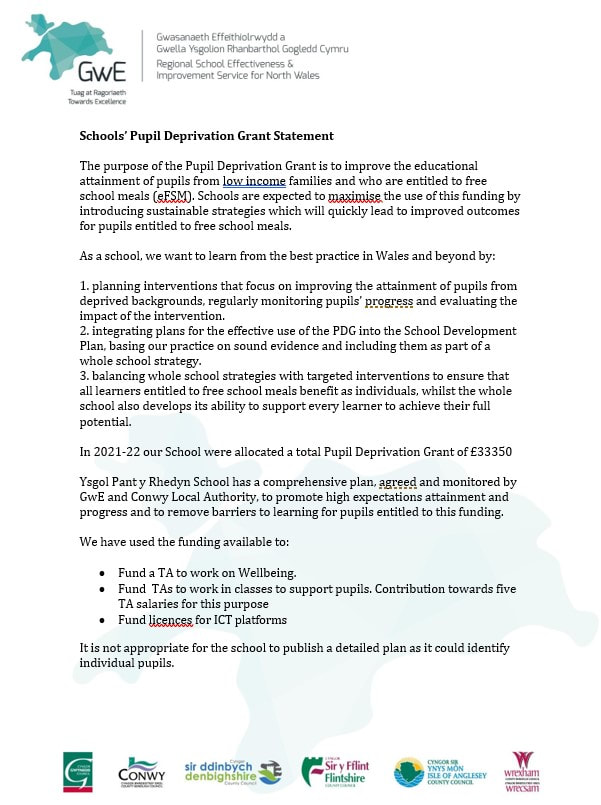
Each year the school is given a pot of money to spend in the form of a grant. This grant is used to support pupils from an impoverished background.
Please note that our activities and plans were curtailed somewhat due to the Covid Pandemic.

Pupil Development Grant School Statement 2025–26
This statement details our school’s use of the PDG for the 2025–26 academic year. It outlines our strategy, how we intend to spend the funding in this academic year, and the effect that last year’s spending had within our school.
School Overview
School name-Ysgol Pant y Rhedyn
Number of learners in school-118
Date this statement was published-07/10/25
Date on which it will be reviewed-As per the grant requirement
Statement authorised by-Matthew Jones
PDG Lead-Matthew Jones
Governor Lead-Menna Wakeford
Funding Overview-PDG funding allocation this academic year-£30,461
Total budget for this academic year-£30,461
Part A: Strategy PlanStatement of Intent
At Ysgol Pant y Rhedyn, our PDG strategy focuses on reducing the impact of poverty on attainment and wellbeing. Our aims are to ensure all pupils make strong progress in literacy, receive effective ALN support, and develop emotional resilience through targeted wellbeing interventions. We will also maintain the role of our wellbeing TA and continue to build staff confidence through professional learning.
This strategy is guided by early intervention, inclusion, and strong relationships. It builds on previous years’ success in literacy, wellbeing, and ALN provision.
Intended OutcomesImproved literacy progress for targeted pupils
Pupils make ‘catch up’ progress in reading, writing, and comprehension.
Enhanced wellbeing and emotional regulation
Reduction in dysregulation incidents and increased pupil confidence.
Improved ALN support and inclusion
Daily diary interventions support communication, organisation, and independence.
Staff confidence and consistency in wellbeing support
Staff apply learning from Timian, ELSA, and bereavement training in daily practice.
Activity in this academic year· Learning and Teaching
Budgeted cost: £ 15461
TA-led literacy interventions – daily diary, guided/group reading, precision teaching
EEF evidence shows small-group reading interventions have a positive impact.
Staff training to strengthen literacy delivery and intervention accuracy
Professional learning supports effective teaching and sustainable impact.
Use of high-quality literacy resources for reading fluency and comprehension
Appropriate resources improve engagement and outcomes.
Regular monitoring of progress and adjustments to intervention groups
Tracking ensures targeted support remains effective.
Community Focused Schools
Budgeted cost: £ 0
Maintaining communication and engagement with families
Parental involvement supports improved learning and wellbeing outcomes.
Information sessions on supporting literacy and emotional wellbeing
Sharing strategies strengthens home-school links and consistency of support.
Wider Strategies
Budgeted cost: £ 15000
Wellbeing TA delivering ELSA, mentoring, and social story sessions
Wellbeing interventions reduce anxiety and support self-regulation.
Staff training in Timian, ELSA renewal, and bereavement support
Improves staff confidence and consistency in supporting pupils.
Purchase of wellbeing and regulation resources
Resources provide practical strategies for self-management and resilience.
1:1 mentoring for vulnerable pupils
Individual support builds trust, self-esteem, and attendance.
Monitoring and evaluation of wellbeing support
Termly review ensures provision is effective and targeted.
Part B: Review of outcomes in the previous academic year (2024–25)Literacy interventions
Pupils made progress in reading fluency and comprehension, closing attainment gaps.
ALN and daily diary support
Pupils gained independence and improved organisational and communication skills.
Wellbeing interventions (ELSA, mentoring, social stories)
Improved self-regulation and engagement, with fewer behaviour incidents.
Staff professional development
Training supported consistent approaches and improved confidence in wellbeing practices.
Overall impact
PDG funding strengthened literacy, wellbeing, and inclusion outcomes across the school.
Externally Provided ProgrammesTimian Training
External provider
Bereavement Support Training
External provider
ELSA Renewal Programme
External or LA support
Further Information (optional)The PDG strategy is reviewed termly with leadership and governors. Impact is evaluated through pupil progress data, wellbeing records, and feedback. Findings inform next steps and ensure continued improvement and equity for all learners.
This statement details our school’s use of the PDG for the 2025–26 academic year. It outlines our strategy, how we intend to spend the funding in this academic year, and the effect that last year’s spending had within our school.
School Overview
School name-Ysgol Pant y Rhedyn
Number of learners in school-118
Date this statement was published-07/10/25
Date on which it will be reviewed-As per the grant requirement
Statement authorised by-Matthew Jones
PDG Lead-Matthew Jones
Governor Lead-Menna Wakeford
Funding Overview-PDG funding allocation this academic year-£30,461
Total budget for this academic year-£30,461
Part A: Strategy PlanStatement of Intent
At Ysgol Pant y Rhedyn, our PDG strategy focuses on reducing the impact of poverty on attainment and wellbeing. Our aims are to ensure all pupils make strong progress in literacy, receive effective ALN support, and develop emotional resilience through targeted wellbeing interventions. We will also maintain the role of our wellbeing TA and continue to build staff confidence through professional learning.
This strategy is guided by early intervention, inclusion, and strong relationships. It builds on previous years’ success in literacy, wellbeing, and ALN provision.
Intended OutcomesImproved literacy progress for targeted pupils
Pupils make ‘catch up’ progress in reading, writing, and comprehension.
Enhanced wellbeing and emotional regulation
Reduction in dysregulation incidents and increased pupil confidence.
Improved ALN support and inclusion
Daily diary interventions support communication, organisation, and independence.
Staff confidence and consistency in wellbeing support
Staff apply learning from Timian, ELSA, and bereavement training in daily practice.
Activity in this academic year· Learning and Teaching
Budgeted cost: £ 15461
TA-led literacy interventions – daily diary, guided/group reading, precision teaching
EEF evidence shows small-group reading interventions have a positive impact.
Staff training to strengthen literacy delivery and intervention accuracy
Professional learning supports effective teaching and sustainable impact.
Use of high-quality literacy resources for reading fluency and comprehension
Appropriate resources improve engagement and outcomes.
Regular monitoring of progress and adjustments to intervention groups
Tracking ensures targeted support remains effective.
Community Focused Schools
Budgeted cost: £ 0
Maintaining communication and engagement with families
Parental involvement supports improved learning and wellbeing outcomes.
Information sessions on supporting literacy and emotional wellbeing
Sharing strategies strengthens home-school links and consistency of support.
Wider Strategies
Budgeted cost: £ 15000
Wellbeing TA delivering ELSA, mentoring, and social story sessions
Wellbeing interventions reduce anxiety and support self-regulation.
Staff training in Timian, ELSA renewal, and bereavement support
Improves staff confidence and consistency in supporting pupils.
Purchase of wellbeing and regulation resources
Resources provide practical strategies for self-management and resilience.
1:1 mentoring for vulnerable pupils
Individual support builds trust, self-esteem, and attendance.
Monitoring and evaluation of wellbeing support
Termly review ensures provision is effective and targeted.
Part B: Review of outcomes in the previous academic year (2024–25)Literacy interventions
Pupils made progress in reading fluency and comprehension, closing attainment gaps.
ALN and daily diary support
Pupils gained independence and improved organisational and communication skills.
Wellbeing interventions (ELSA, mentoring, social stories)
Improved self-regulation and engagement, with fewer behaviour incidents.
Staff professional development
Training supported consistent approaches and improved confidence in wellbeing practices.
Overall impact
PDG funding strengthened literacy, wellbeing, and inclusion outcomes across the school.
Externally Provided ProgrammesTimian Training
External provider
Bereavement Support Training
External provider
ELSA Renewal Programme
External or LA support
Further Information (optional)The PDG strategy is reviewed termly with leadership and governors. Impact is evaluated through pupil progress data, wellbeing records, and feedback. Findings inform next steps and ensure continued improvement and equity for all learners.